Few figures in the history of technology have had an impact as far-reaching as Alan Turing. Renowned as one of the foundational pillars of computer science, Turing’s theories and innovations have shaped not only computational machinery but the very way society perceives information, logic, and artificial intelligence. Understanding Turing’s role in computer science entails tracing his distinct contributions to theoretical frameworks, practical accomplishments, and his enduring legacy across disciplines.
Theoretical Origins: The Turing Machine
The origins of theoretical computer science are closely tied to Turing’s 1936 paper, On Computable Numbers, with an Application to the Entscheidungsproblem. Within this seminal work, Turing introduced what is now known as the Turing Machine. This abstract machine provided a mathematically rigorous way to describe computation, establishing a framework to understand what problems could be solved by an algorithm.
A Turing Machine, as proposed by Turing, is made up of an endlessly long tape, a head that can read and write while shifting left or right, and a group of rules determining its operations. This conceptual model is not an actual machine; instead, it serves as a foundation for understanding the boundaries of what can be computed. Unlike prior models of mechanical logic, Turing’s method structured the process of computation, allowing later scientists to categorize issues as either solvable or unsolvable. The Turing Machine continues to be an essential instructional and applied idea in computer science programs around the globe.
Computability and the Limits of Logic
Turing’s investigation into the concept of computability tackled crucial philosophical inquiries, such as the boundaries of human reasoning and the capabilities of machine computations. He showed that there exist clearly defined problems which are unsolvable; specifically, problems for which no algorithm can consistently offer a conclusive answer. Among the most renowned outcomes from the idea of the Turing Machine is the Halting Problem. Turing demonstrated that it is not feasible for any universal algorithm to ascertain for every possible program-input combination whether the program will ultimately stop or continue indefinitely.
The implications of this revelation extend deeply into software engineering, cybersecurity, and mathematical logic. By delineating the boundaries of what can and cannot be computed, Turing set the stage for decades of research into complexity theory, algorithmic design, and the philosophical foundations of artificial intelligence.
Turing’s Practical Triumph: Cryptanalysis and the Birth of Modern Computing
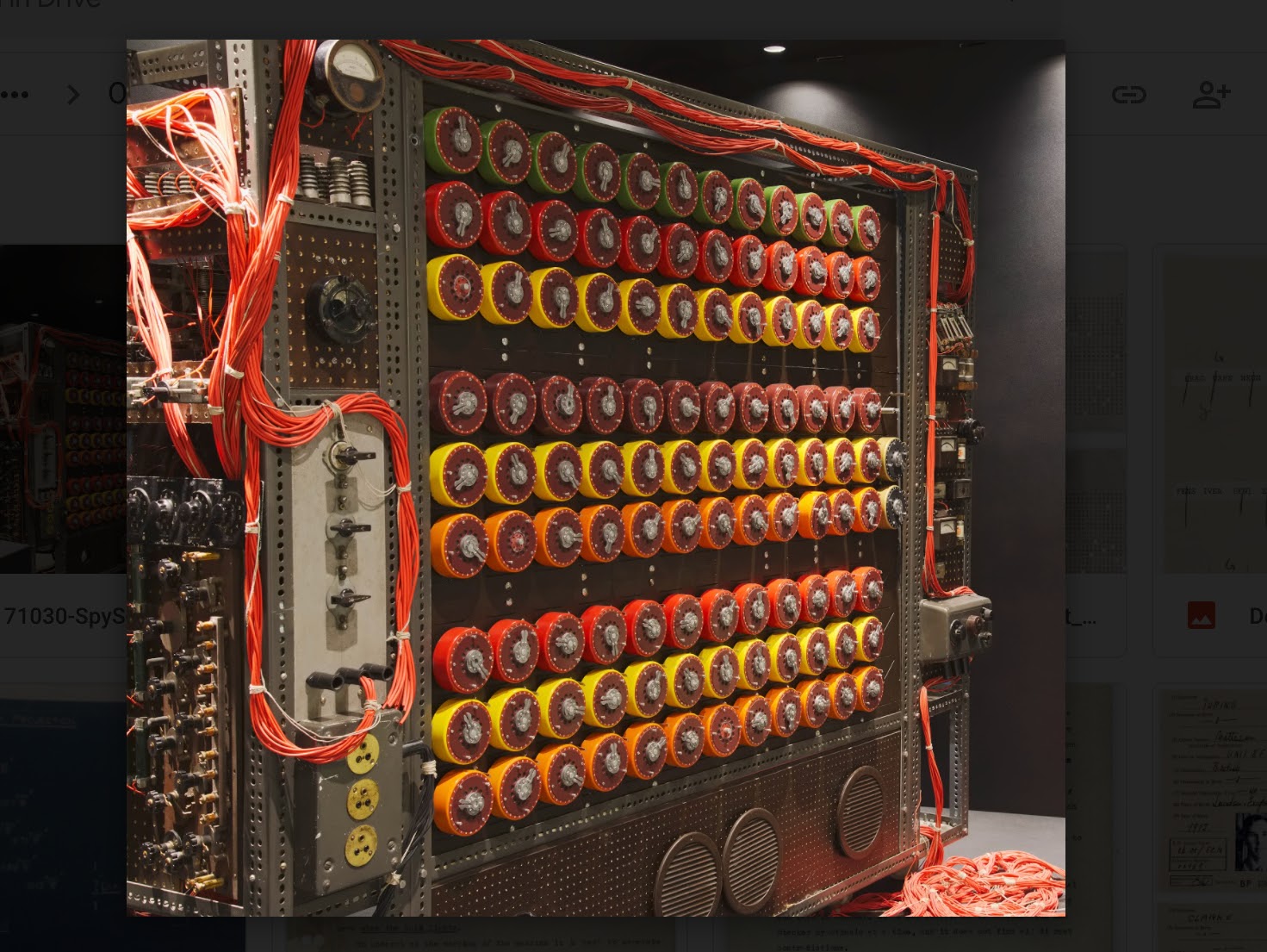
While Turing’s abstract theories were remarkable, his practical achievements during the Second World War arguably changed the course of history. As part of the British Government Code and Cypher School at Bletchley Park, Turing led efforts to decrypt messages encrypted by the German Enigma machine. Building upon Polish cryptologic work, he designed and oversaw the construction of the Bombe—an electromechanical device capable of automating the process of codebreaking.
This work did not merely yield military advantage; it showcased the essential principles of programmable machines under urgent, real-world constraints. The Bombe provided an early, tangible demonstration of automated logical reasoning and the manipulation of symbolic data—precursors to the operations of modern digital computers.
Turing’s efforts in breaking codes highlighted the crucial role and possibilities of computing devices. Aside from advancements in hardware, his approach demonstrated how abstract models could direct the creation of machines designed for targeted problem-solving tasks.
The Evolution of Artificial Intelligence
Alan Turing’s vision reached beyond mechanized calculation. In his 1950 work, Computing Machinery and Intelligence, Turing addressed the then-radical question: Can machines think? As a means to reframe this debate, he proposed what is now called the Turing Test. In this test, a human interrogator interacts via textual communication with both a human and a machine, attempting to distinguish between the two. If the machine’s responses are indistinguishable from the human’s, it is said to possess artificial intelligence.
The Turing Test remains a touchstone in debates about machine intelligence, consciousness, and the philosophy of mind. It shifted the conversation from abstract definitions to observable behaviors and measurable outcomes—a paradigm that informs the design of chatbots, virtual agents, and conversational AI today. Turing’s interdisciplinary approach melded mathematics, psychology, linguistics, and engineering, continuing to inspire contemporary researchers.
Legacy and Modern Relevance
Alan Turing’s intellectual legacy is embedded in both the foundations and frontiers of computer science. The theoretical constructs he pioneered—such as Turing completeness—serve as benchmarks for programming languages and architectures. Notably, any computer capable of simulating a universal Turing Machine is considered capable of performing any conceivable computation, given adequate resources.
His work influenced the post-war development of stored-program computers. Researchers such as John von Neumann adopted and adapted Turing’s concepts in designing architectures that underpin modern computers. Furthermore, Turing’s philosophical inquiries into the nature of intelligence and consciousness prefigured ongoing debates in cognitive science and neuroscience.
Case studies abound: from the proven undecidability in program verification (demonstrating the impossibility of certain automated bug detection), to the ethical considerations surrounding AI, which draw directly from Turing’s original frameworks. The fields of computational biology, quantum computing, and cybersecurity regularly invoke Turing’s principles as guidelines and starting points.
An intellect beyond his era
Alan Turing’s contributions reflect a unique synthesis of theoretical depth, practical ingenuity, and visionary scope. He not only mapped the bounds of algorithmic logic but also translated these insights into transformative wartime technology and enduring philosophical challenges. Every algorithm, every secure communication, every step toward artificial cognition, echoes the foundational questions and constructs he formulated. The trajectory of computer science, from its origins to its current frontiers, continues to dialogue with the legacy of Alan Turing—a legacy woven into the logic of every computation and the aspiration of every innovation.