The Origins of a Revolutionary Designer
Rei Kawakubo, the mind behind Comme des Garçons, exemplifies a beacon of avant-garde design in today’s fashion scene. Since launching her brand in Tokyo in 1969, Kawakubo has persistently broken the mold, blending creative insight with unconventional tailoring. Her creations surpass mere fashion cycles, engaging in an ongoing exploration of form, identity, and significance. Kawakubo’s designs are not just clothes; they are wearable dialogues that challenge perceptions of beauty, gender norms, and the purpose of clothing.
Preliminary Design and Thought-Provoking Ideas
Kawakubo embodies the true spirit of conceptual fashion design: an area where concepts and thought are prioritized, while the actual creation plays a less crucial role. Under her influence, apparel becomes an intellectual challenge, questioning what fashion signifies in society. This methodology is evident in her 1997 Autumn/Winter collection, Lumps and Bumps, where exaggerated padding altered the shape, making the models’ figures almost indistinguishable. These shapes confronted conventional notions of beauty, highlighting themes of bodily independence, irregularity, and societal perception.
Another prominent instance can be noted in her Spring/Summer 2017 lineup, characterized as “art of the in-between.” The items exhibited were large-scale, sculptural designs that seldom looked like traditional attire; rather, they transformed into dynamic exhibits on the catwalk. Analysts and scholars have frequently likened her collections to avant-garde styles in art, including Dadaism—highlighting interruption, absurdity, and rebellion against established systems.
Deconstruction and Gender Fluidity
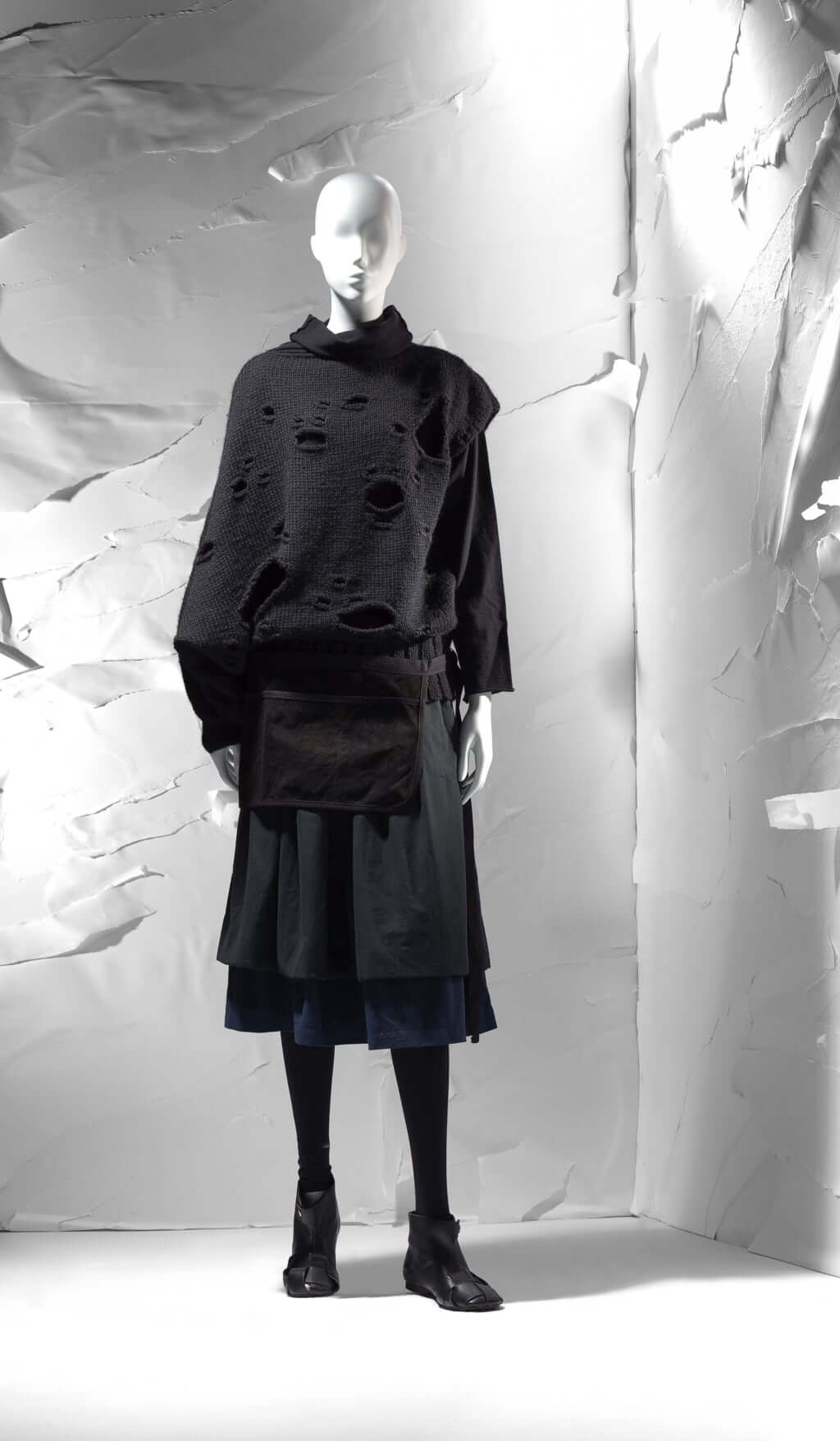
Kawakubo’s process often employs deconstruction, not simply as a method to expose garment construction, but as an allegorical act. Seams are placed on the outside, linings are removed, hems remain raw—each decision pointing to the artificiality of norms in both fashion and society. By destabilizing traditional garment making, Kawakubo reframes broader discussions about gender and identity.
Her collections often obscure the lines between masculine and feminine styles. The early Comme des Garçons pieces, lacking definite gender indicators, represented a significant departure from conventional binary norms. Items such as structured jackets with pronounced shoulders and undefined cuts highlighted the performative nature of gender roles in fashion, resonating with Judith Butler’s notions of gender performativity. Kawakubo has expressed her desire to create “a sensation of something unprecedented,” capturing not only innovative design but also the chance to rethink identity.
Exploring Culture via Materials and Methods
Kawakubo’s work is imbued with cultural critique, often referencing Japanese aesthetics of imperfection and transience—particularly concepts such as wabi-sabi. By utilizing distressed fabrics, asymmetry, and unfinished edges, she aligns her creations with philosophies that celebrate impermanence and beauty in imperfection. Her collaboration with artist Cindy Sherman for the Comme des Garçons Spring 2014 advertising campaign reinforced this alignment: outfits and imagery pointed not to an idealized version of the wearer, but to the multiplicity of identities they could inhabit.
The brand’s regular use of unconventional materials—industrial felt, latex, and synthetic mesh—breaks the boundaries between fashion and other creative disciplines, integrating elements from sculpture, architecture, and installation art. This material experimentation cements her position at the intersection between fashion and fine art, as evidenced by the Metropolitan Museum of Art’s retrospective “Rei Kawakubo/Comme des Garçons: Art of the In-Between,” one of the few times the institution has focused on a living designer.
Disrupting the Logic of Commercial Fashion
While fashion often aligns itself with commerce and repetitive cycles of trends, Kawakubo’s approach subverts these systems. Comme des Garçons’ most renowned runway presentations are frequently seen as unwearable—or as critics put it, “anti-fashion”—yet the brand enjoys cult popularity and influences commercial collections globally. This paradox demonstrates Kawakubo’s ability to ignite conversation at the core of the fashion industry while remaining financially viable.
She also departs from the idea of a designer as a star. Avoiding media interactions and publicity tactics, Kawakubo prioritizes the work itself over personal recognition, ensuring attention is directed towards creative endeavors rather than personal acclaim—a method that directly opposes current industry norms.
Legacy and Ongoing Influence
For emerging designers and multidisciplinary creatives, Rei Kawakubo remains a lasting icon of defiance and creativity. Labels such as Vetements, Balenciaga under Demna Gvasalia, and the creations of Martin Margiela reflect her revolutionary techniques—from redefining garment construction to challenging conventional aesthetic principles. Her intellectual discipline also adds to extensive cultural dialogues about post-modernism and anti-capitalist perspectives in the creative sectors.
Rei Kawakubo’s work lies not in proposing answers, but in raising questions. Each collection is less a declaration and more an open dialogue with art, gender, body, and culture. Her designs demand that audiences become active participants in interpretation, proposing that meaning is not inherent but constructed, deconstructed, and ever-evolving.
As the landscape of design and culture continues to transform, Kawakubo’s conceptualism offers both designers and observers a guide for rethinking boundaries—not only in dress but in thought itself.