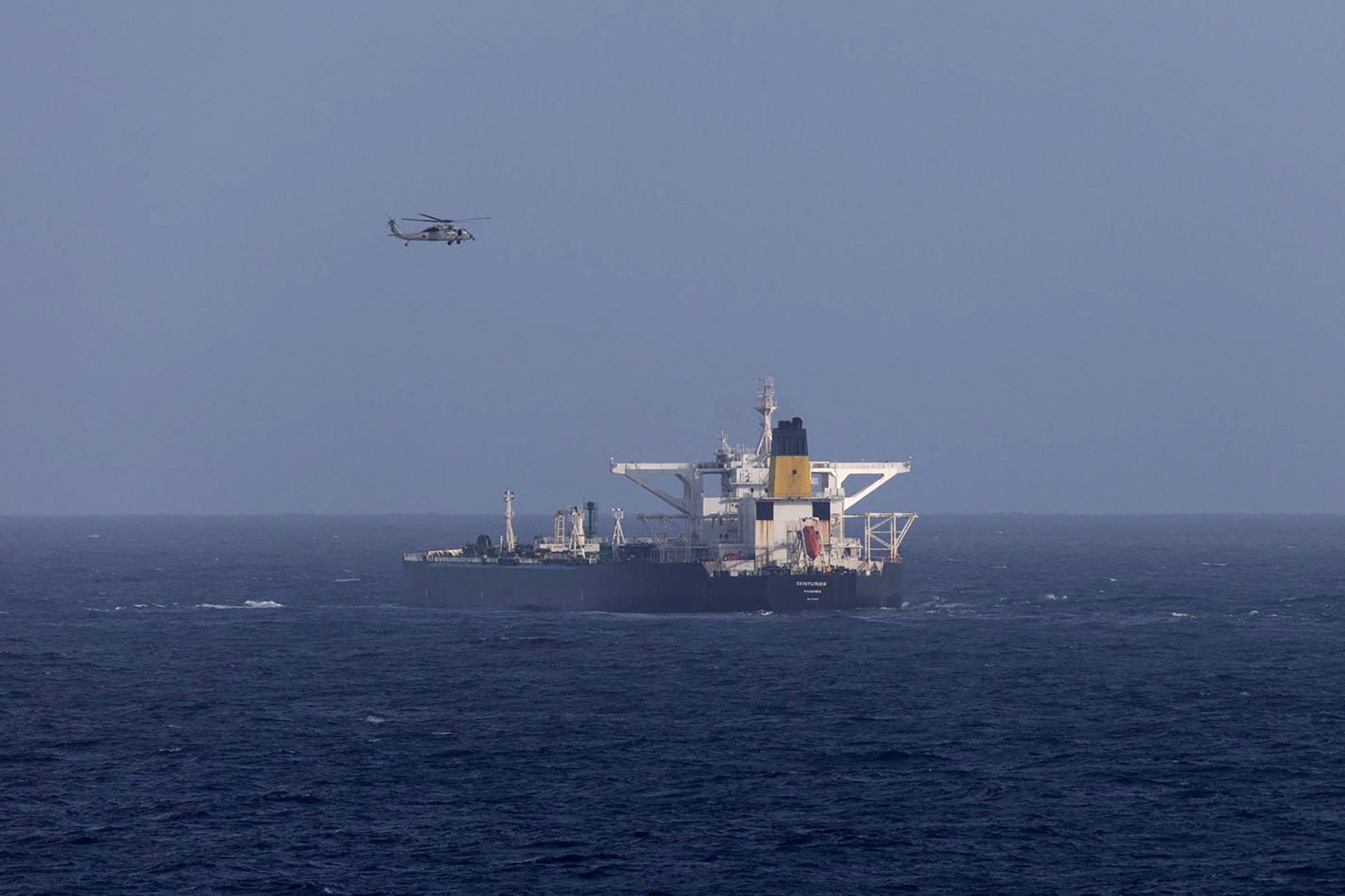
A U.S. Coast Guard mission unfolding in international waters near Venezuela has emerged as the newest flashpoint in an already tense dynamic between Washington and Caracas. The chase involving a sanctioned vessel highlights wider sanction‑enforcement efforts and introduces renewed worries about legality, regional stability, and the potential for escalation across the Caribbean.
U.S. officials confirmed that the Coast Guard is actively tracking a vessel believed to be operating as part of an illicit maritime network linked to sanctions evasion. The ship, identified as Bella 1, is alleged to be navigating under a false flag while subject to a judicial seizure order issued by U.S. authorities. According to individuals familiar with the matter, the vessel has been under scrutiny for months and was formally added to the U.S. sanctions list in mid-2024.
The pursuit is unfolding in open international seas near the Venezuelan coast, a circumstance that has attracted significant scrutiny from regional governments and global observers. Although U.S. officials portray the mission as a legitimate application of counterterrorism measures and sanctions enforcement, detractors contend that these actions can blur the boundary between lawful enforcement and undue pressure, particularly when they involve vessels tied to a sovereign nation’s energy sector.
The tightening of sanctions and the emergence of shadow fleets
The case of Bella 1 reflects a growing challenge for sanctioning authorities worldwide: the emergence of so-called “dark fleet” or “shadow fleet” vessels. These ships often operate with obscured ownership structures, frequently change names and flags, and rely on complex networks of intermediaries to move sanctioned commodities such as oil. According to experts, these fleets are not typically dedicated to a single country but function as flexible tools for sanctions evasion across multiple regions.
U.S. officials allege that Bella 1 is part of such a network and has ties to Sa’id al-Jamal, identified by Washington as a key financial facilitator for the Houthi movement. Under U.S. law, vessels connected to such networks can be sanctioned under counterterrorism authorities, even when operating far from active conflict zones. The inclusion of Bella 1 on the sanctions list earlier this year signaled a broader effort to disrupt financial and logistical channels believed to support militant groups.
Viewed from the U.S. standpoint, maritime interdictions remain essential to enforcing sanctions, as officials contend that letting sanctioned ships move unhindered would weaken the authority of international restrictions and encourage the very networks built to evade them, while emphasizing that the Coast Guard’s mission is both protective and preventive, intended to dissuade future violations.
However, the growing number of such operations has prompted concerns over uniformity, legal authority, and proportionality. While international maritime law permits specific enforcement measures on the high seas, interpretations differ, and conflicts frequently emerge where sanctions collide with sovereignty assertions and geopolitical tensions.
A pattern of interdictions in the Caribbean
If Bella 1 is intercepted, it would mark the third such seizure in the Caribbean in a relatively short period. Earlier this month, U.S. authorities seized a vessel known as Skipper near Venezuelan waters, citing similar sanctions-related violations. Days later, the Department of Defense confirmed the interdiction of a second tanker that, according to the White House, was transporting sanctioned oil.
These actions suggest a sustained campaign rather than isolated incidents. The Caribbean and adjacent waters have become a focal point for U.S. enforcement efforts, particularly as Venezuela seeks alternative routes to export oil amid longstanding economic restrictions. The region’s geography, combined with high volumes of maritime traffic, makes it an attractive corridor for sanctions evasion but also a complex environment for enforcement.
Critics of the U.S. approach caution that continual interdictions could heighten tensions and set perilous precedents, while supporters argue that inaction would undermine global sanctions frameworks and enable illicit networks to expand; together, these views underscore the fragile equilibrium between enforcement and escalation within contested geopolitical arenas.
Regional backlash and accusations of illegality
The most vocal criticism of the recent interdictions has come from the Bolivarian Alliance for the Peoples of Our America (ALBA), a regional political and economic bloc that includes Venezuela, Cuba, Nicaragua, and several Caribbean nations. In a statement released following the seizure of the second tanker, ALBA condemned what it described as the “theft and seizure” of a vessel transporting Venezuelan oil.
According to the bloc, the operation unlawfully stripped the crew of their freedom and amounted to an act of aggression against a sovereign nation, while ALBA officials went even further by describing the interdiction as an act of piracy and a breach of international law, including principles set out in the United Nations Charter, and they cautioned that moves like these create a dangerous precedent for the region and for the international system overall.
These accusations reflect broader concerns among some Latin American and Caribbean governments about unilateral enforcement actions by powerful states. For countries with historical sensitivities to external intervention, maritime seizures can evoke memories of coercive diplomacy and economic pressure. The language used by ALBA underscores the depth of regional unease and the potential for diplomatic fallout.
Washington, for its part, disputes these claims. U.S. officials assert that the interdictions comply with the law, are precisely directed, and serve to uphold sanctions authorized under both domestic and international counterterrorism measures. They contend that ships sailing under fraudulent flags and subject to judicial seizure orders relinquish certain protections, even when navigating international waters.
Venezuela, oil, and geopolitical pressure
At the heart of the dispute is Venezuela’s oil sector, which has for years been subjected to U.S. sanctions aimed at pressuring the government in Caracas, and as access to its traditional markets has narrowed, the country’s crude shipments have come to depend more heavily on murky transport networks and intermediaries operating in legal gray zones, a shift that has prompted intensified scrutiny from U.S. officials intent on shutting down remaining loopholes.
The pursuit of Bella 1 must also be understood within the broader context of U.S.–Venezuela relations, which have been marked by cycles of confrontation and limited engagement. In recent months, tensions have intensified as the Trump administration has authorized strikes on vessels described as drug-running boats in the Caribbean and eastern Pacific. While officials frame these actions as counter-narcotics operations, critics see them as part of a broader pressure campaign against Caracas.
President Donald Trump added to the uncertainty last week when he declined to rule out the possibility of war with Venezuela. Although no immediate military action has been announced, the statement has amplified concerns that maritime enforcement could become entangled with broader strategic calculations. For regional observers, the combination of sanctions, interdictions, and rhetorical escalation creates an unpredictable environment.
Legal and strategic implications
The chase of sanctioned ships such as Bella 1 introduces intricate legal challenges that reach far beyond the immediate mission, as international maritime law allows certain actions against vessels without nationality or those involved in crimes recognized worldwide, while the enforcement of sanctions occupies a less defined realm, especially when unilateral measures overlap with broader multilateral standards.
Legal experts note that operating under a false flag can expose a vessel to enforcement, but disputes often arise over evidence, due process, and the treatment of crews. Human rights considerations also come into play, especially when detentions occur far from clear judicial oversight. The reaction from ALBA highlights how these concerns resonate politically, even when legal arguments are contested.
Strategically, the U.S. approach conveys a calculated belief that firm enforcement discourages future breaches while demonstrating determination. However, deterrence rests not only on decisive measures but also on legitimacy, and if regional partners judge such interdictions as overreaching or illegal, their cooperation could weaken and undermine broader security and economic goals.
The broader picture of maritime enforcement
Beyond Venezuela, the case of Bella 1 illustrates a global trend toward intensified maritime monitoring and enforcement. As sanctions become a more common tool of statecraft, so too does the need to police complex supply chains that span oceans and jurisdictions. Advances in tracking technology have made it easier to identify suspicious behavior, but enforcement remains resource-intensive and politically sensitive.
The U.S. Coast Guard’s growing responsibilities highlight this shift, as a service once centered on domestic patrols and search-and-rescue now increasingly undertakes enforcement efforts abroad. Supporters contend that its blend of expertise and adaptability positions it well for such duties, while critics warn that broadening its mission could place personnel at heightened diplomatic and operational risk.
A complex political dilemma ahead
As Bella 1 continues to be pursued, the outcome of the operation will be closely watched. An interception could reinforce the message that sanctions will be enforced aggressively, regardless of diplomatic backlash. A failure to intercept, by contrast, could embolden networks engaged in sanctions evasion and raise questions about enforcement capacity.
Regardless of the immediate result, the episode underscores how maritime enforcement has become a front line in geopolitical competition. For Venezuela and its allies, the actions represent an unacceptable intrusion. For Washington, they are a necessary response to illicit networks and security threats.
The challenge ahead will involve handling these rival narratives while preventing any rise in tensions. In a region already attuned to external pressure, every action takes on symbolic significance. The pursuit of Bella 1 therefore reaches beyond a single vessel, encompassing the principles, norms, and power dynamics that will influence the future of international maritime governance.