
Our website uses cookies to enhance and personalize your experience and to display advertisements (if any). Our website may also include third party cookies such as Google Adsense, Google Analytics, Youtube. By using the website, you consent to the use of cookies. We have updated our Privacy Policy. Please click the button to view our Privacy Policy.

Investments and Business

Panamá Viejo Residences: urban calm in Panama City

Panamá Viejo Residences: Quiet City Residences in Panama

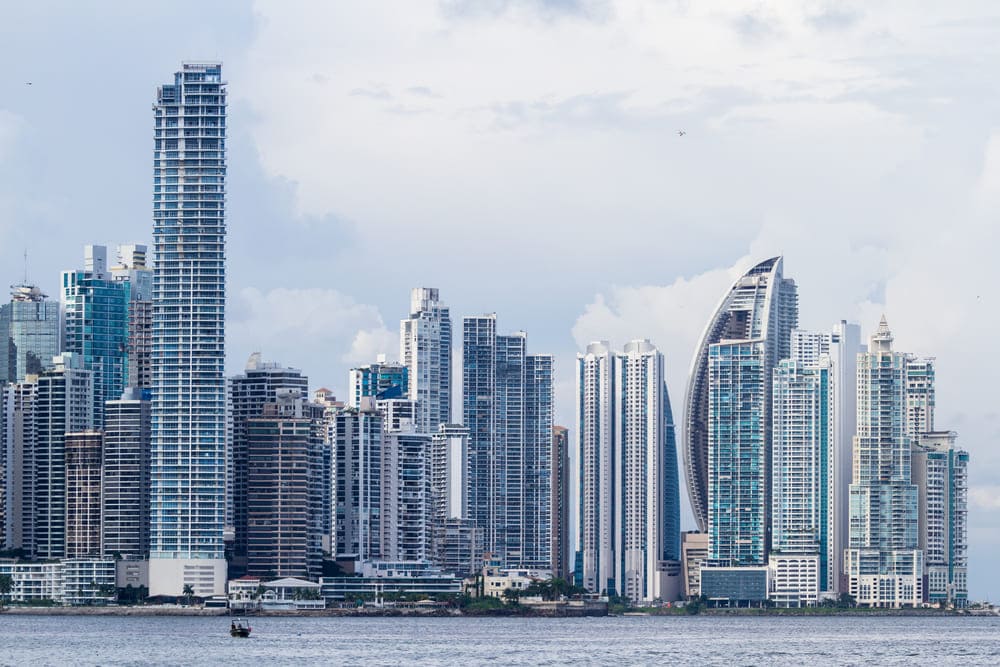
Panamá Viejo Residences has emerged as a compelling choice for people seeking tranquility while remaining close to downtown Panama City, offering a historic residential atmosphere with ample greenery and less congestion that provides a calmer way of living within one of the capital’s most accessible districts.In addition to offering modern apartments within a planned community, the project is located near natural spaces such as Omar Recreational Park and offers quick access to major thoroughfares like the Corredor Sur and Vía Cincuentenario. If you’re still wondering why Panama Viejo Residences is ideal for living in peace without leaving the city center,…
Read More
Is residency required to buy property in Panama?

Buying Property in Panama: Residency Requirements?

It is not required to hold residency to purchase property in Panama. Panamanian legislation permits any individual to buy real estate in the country without obtaining permanent residency or citizenship, a factor that has helped position the Panamanian property market among the region’s most accessible options for investors or those aiming to build long-term wealth.The opening of Panama’s real estate market to international buyers, along with the rise of well-connected residential communities, has broadened the possibilities for anyone seeking more flexibility when investing in the country, especially in contemporary and comfortable developments such as Panamá Viejo Residences. Still asking whether…
Read More
Vienna, in Austria: What makes public procurement opportunities accessible to SMEs

SMEs & Public Procurement: Vienna’s Accessibility Strategies

Vienna combines local procurement policy, digital tools, and business support to open public contracts to small and medium enterprises (SMEs). The city’s procurement environment reflects wider European rules that aim to make public spending competitive, transparent, and accessible. For SMEs this creates practical opportunities: smaller contract sizes, simpler qualification procedures, early market engagement, and targeted support services. Below I describe the legal and operational mechanics, provide examples and data, and offer practical steps for SMEs wanting to participate.Regulatory and policy landscape that supports SME accessAlignment with European procurement directives: Austria follows EU procurement standards that emphasize openness, equal treatment, and…
Read More
When a credit report can hurt your chances of being hired

Decoding Spain: Regional Tax, Talent & Incentive Differences for Investors

Spain is a decentralized country where autonomous regions exercise significant fiscal and policy influence. For investors, regional differences matter as much as national law. Evaluations typically balance statutory tax rules, regional surcharges and special regimes, local talent pools and labor costs, and the availability and conditionality of subsidies and fiscal incentives. This article outlines the framework investors use, gives concrete examples and cases, and recommends measurable steps for decision making.Tax environment: headline rates, effective burden, and special regimesSpain’s statutory corporate income tax rate stands at 25%, yet the actual tax load can shift due to several factors:Regional tax adjustments and…
Read More
Oil surges and stock futures sink as war in Iran threatens crude supply

Oil Surges, Stock Futures Sink: Iran War Threatens Crude Supply

Oil markets jumped sharply on Monday following coordinated strikes by the United States and Israel on Iran, sparking fears of a broader conflict across the Middle East and potential disruptions to global energy supplies.Markets react to Middle East tensionsUS crude futures rose 7.5% in early trading, while Brent crude, the international benchmark, spiked 6.2%, briefly surpassing $82 per barrel before settling around $77. This surge follows weeks of speculation about potential military action, which had already nudged oil prices higher in anticipation of conflict.Meanwhile, stock futures for major indices tumbled. The S&P 500, Nasdaq, and Dow Jones all declined more…
Read More
How do companies measure AI ROI beyond cost savings?

Unlocking AI Value: Beyond Simple Cost Savings ROI

Artificial intelligence investments are no longer judged solely by how much money they save. While automation and efficiency gains remain important, leading organizations evaluate AI return on investment through a broader, more strategic lens. This expanded view reflects how AI reshapes decision-making, customer experiences, innovation capacity, and long-term competitiveness.Why Reducing Costs Alone Falls ShortCost reduction is often the easiest benefit to measure, such as fewer labor hours or lower error rates. However, many AI initiatives are designed to create value rather than simply reduce expenses. Focusing only on savings can undervalue initiatives that improve growth, resilience, or strategic positioning. For…
Read More
Gambia: RSE en agricultura que impulsa cadenas justas y capacitación rural

Paraguay: How agribusiness investors assess land, water, and logistics constraints

Paraguay is a strategically important, resource-rich country for agribusiness investment. Its comparative advantages include large tracts of underutilized agricultural land, abundant renewable water and low-cost electricity from major hydroelectric plants. Key constraints are uneven infrastructure, seasonal river navigability, land tenure complexity, deforestation risk, and the need for traceable supply chains. This article synthesizes how investors systematically evaluate land, water, and logistics constraints, with practical metrics, examples, and a due-diligence checklist.Macro context and why detailed assessment mattersParaguay spans about 400,000 square kilometers and includes two distinct agro-ecological regions: a humid, fertile eastern area and the semi-arid Gran Chaco in the west.…
Read More
Jamaica: What makes PPP projects bankable in small island economies

Small Island Economies: Jamaica’s Approach to Bankable PPP Projects

Jamaica illustrates the opportunities and constraints that shape public-private partnerships (PPPs) across small island economies. Bankable PPPs—projects that can attract long-term commercial financing on realistic terms—depend on a tight combination of credible revenue streams, clear legal frameworks, disciplined procurement, risk allocation that matches capacity, and targeted credit enhancement. This article outlines the practical features that make PPPs investable in Jamaica, draws on local examples, and suggests instruments and institutional arrangements that address common island-specific risks: narrow domestic capital markets, climate exposure, land scarcity, and pronounced seasonality in demand.Why bankability plays a crucial role for small islandsBankability serves as the vital…
Read More
How do businesses use pricing experiments without damaging trust?

Ethical Pricing Experiments: Building Trust While Testing

Pricing experiments allow businesses to understand how customers react to varied price points, package combinations, discounts, or billing models, and they are commonly applied across software, retail, travel, and subscription industries to refine revenue strategies and product alignment; yet pricing inevitably raises concerns about fairness, as customers may perceive shifting prices as manipulative even when the intention is genuine learning rather than exploitation.Trust serves as a lasting advantage. Studies by customer experience firms repeatedly reveal that when customers feel prices are unfair, they are more inclined to switch providers, voice public complaints, and dissuade others from purchasing. The issue is…
Read More
Jeff Bezos-owned Washington Post conducts widespread layoffs, gutting a third of its staff

A Third of Washington Post Staff Laid Off by Jeff Bezos’s Company

The latest wave of layoffs at The Washington Post marked a breaking point for one of the most influential newsrooms in the United States. Beyond the immediate loss of jobs, the cuts revealed structural tensions between profitability, editorial mission, and ownership priorities.Early Wednesday morning, employees across The Washington Post were informed that roughly one-third of the company’s workforce had been eliminated. The decision delivered a severe shock to a newsroom already strained by years of uncertainty, declining subscriptions, and repeated restructuring. Staff members were instructed to stay home as notifications were issued, a move that underscored both the scale and…
Read More