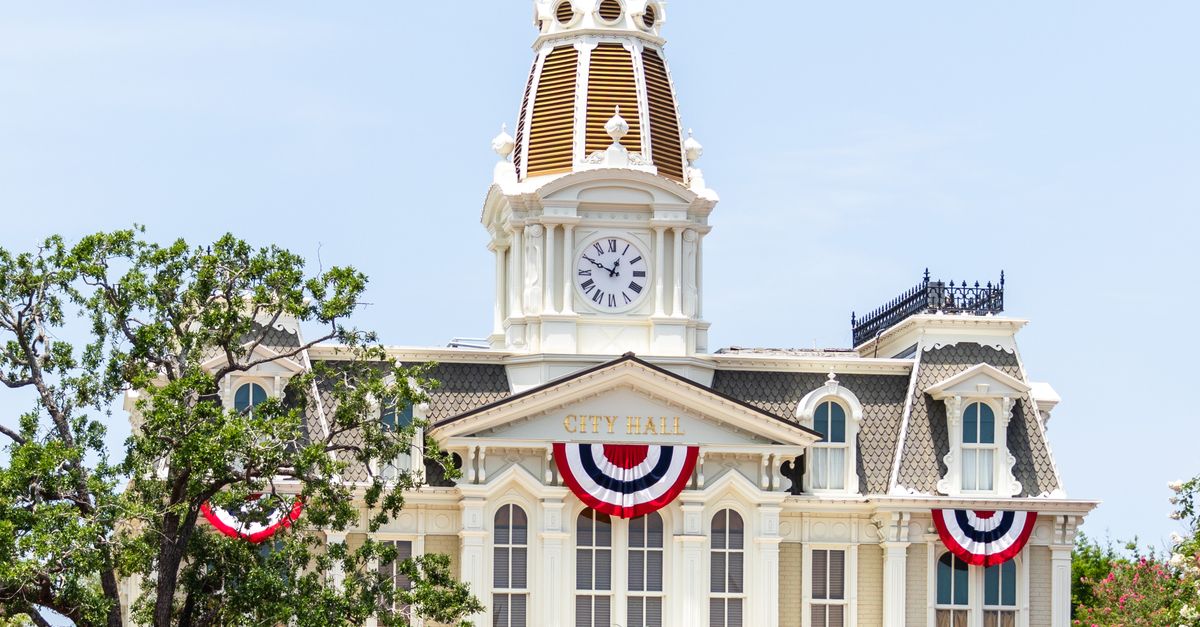
Civic engagement refers to the various ways individuals take part in public life to shape community conditions and influence policy, including voting, joining public meetings, serving on boards, volunteering, becoming part of civic groups, demonstrating, donating, and using digital platforms for organization. The environment where people reside, whether in a small town or a large city, affects the available opportunities, social expectations, and limitations tied to these actions. Variations stem from factors such as population density, social networks, institutional strength, demographic diversity, transportation and communication systems, and the overall scale of public challenges.
Essential factors for evaluating life in small towns versus major cities
- Face-to-face ties and social capital: intensity of interpersonal relationships, trust, and repeated interactions.
- Institutional access: proximity and access to elected officials, civic institutions, and public meetings.
- Scale and specialization: number and variety of civic organizations, advocacy groups, and service providers.
- Modes of participation: electoral participation, volunteering, community leadership, protest and digital activism.
- Barriers and resources: time, transportation, local media, funding for nonprofits, broadband access.
Community bonds and social norms
Small towns often feature dense, multiplex social networks: people are more likely to know neighbors, shopkeepers, teachers and local officials personally. These repeated face-to-face interactions foster strong norms of reciprocity and visible, reputational incentives to participate. As a result, civic roles often rotate among a relatively small set of community leaders — volunteer fire chiefs, PTA officers, church leaders and members of school boards.
Large cities foster more loose-knit social circles, where individuals meet a wide range of groups yet form fewer deep relationships with any of them; they also cultivate an extensive landscape of civic organizations, advocacy groups and nonprofits that draw volunteers and activists interested in highly specific causes, and while this urban variety nurtures specialized civic engagement such as art collectives, immigrant support hubs and issue-driven nonprofits, it weakens the built-in social expectations for participation that small-town environments naturally create.
Electoral participation and local politics
- Local elections: In small towns, attendance at town halls, selectboard meetings, and school board elections can be high on a per-capita basis because decisions tangibly affect residents’ lives and voting blocs are smaller and more visible. Personal relationships with candidates increase the likelihood of turnout and volunteer mobilization.
- Municipal and urban elections: Large-city politics often require complex, organized campaigns and greater resources. Voter turnout for city primaries and municipal contests can be low relative to interest in outcomes, partly because of scale, greater anonymity, and more fractured constituencies.
- National elections: Urban areas contribute a large share of national votes by absolute numbers because of population concentration. Voting behavior differs by density and demographic composition: metropolitan cores tend to lean toward different parties and policy preferences than rural counties, so the political dynamics and incentives for turnout differ.
Volunteer work, community groups, and casual civic engagement
Volunteering patterns differ by type and motivation. Small towns historically show strong participation in generalized, place-based volunteerism: neighborhood watch groups, volunteer fire departments, school boosters and church-related activities. These roles are often social as well as civic and may be distributed informally across long-standing residents.
Large metropolitan areas tend to draw formal volunteers thanks to their sizable nonprofit organizations, cultural venues, hospitals, and social service agencies. In cities, volunteer efforts often take the form of short-term or highly specialized activities such as pro bono legal support, arts programming, or legal aid for immigrants. Urban centers also employ more nonprofit workers and maintain more structured civic systems, opening the door to paid civic roles and professional routes into public service.
Demonstrations, social movements, and advocacy centered on specific issues
Cities are frequently the hubs of large demonstrations and social movements because of visibility, media presence, and transportation networks that concentrate people. Examples include major demonstrations in New York, Los Angeles, Chicago and Washington, D.C. that attract national attention (civil rights and labor movements historically; Black Lives Matter and climate marches more recently).
Small towns can host powerful local mobilizations that affect policy at the county or state level, and they can be the epicenters of targeted grassroots campaigns (e.g., local zoning battles, school curriculum fights, resource extraction protests near rural communities). Rural and small-town spaces have also become sites for nationalized fights over cultural and economic issues, sometimes amplified by social media.
Digital engagement and networks
Digital tools reshape urban and rural civic life differently. Cities benefit from denser networks and often stronger broadband and organizational capacity, enabling large-scale digital campaigns, crowdfunding for civic projects, and complex volunteer coordination. Many urban nonprofits maintain robust online platforms and social-media presences to mobilize supporters.
Small towns increasingly depend on social media to share community updates and organize activities through local Facebook groups, Nextdoor, or neighborhood email lists, yet limited broadband access and varying levels of digital literacy can restrict their impact. At the same time, digital platforms may elevate small-town issues into broader state or national discussions, effectively narrowing the gap between different spheres of civic engagement.
Local media, information ecosystems, and trust
Local newspapers and radio historically supported civic information flows. Small towns often retain a single local paper or community bulletin that everyone consults; that concentrated information ecosystem can increase civic awareness for local matters. However, many small-town newspapers have closed or shrunk, eroding that advantage.
Big cities host a richer media environment—multiple local outlets, urban investigative reporting, and community news platforms—but residents face information overload and fragmented attention. Trust in institutions and media tends to vary more across neighborhoods and demographic groups in cities, complicating collective action.
Barriers and facilitators to engagement in each setting
- Small towns — facilitators: strong social pressure to participate; proximity to officials; clear visibility of outcomes; tradition of volunteerism.
- Small towns — barriers: limited diversity of organizations and resources; fewer paid civic jobs; loss of local media and population decline; potential exclusion of newcomers or marginalized groups.
- Big cities — facilitators: abundant organizations, funding sources, staff capacity, and infrastructure for large campaigns; media attention; scale for issue mobilization.
- Big cities — barriers: anonymity and fragmentation; time pressures and commuting; civic fatigue; higher competition for volunteers and donors; inequality across neighborhoods.
Representative cases and examples
- Small-town civic life: Many New England towns hold yearly town meetings where residents directly vote on budget matters, offering an immediate, in-person style of governance. Volunteer fire departments, rotary clubs, and local school boards frequently become informal training arenas that prepare emerging community leaders.
- Urban civic infrastructure: New York City’s community boards, participatory budgeting initiatives across several major cities, and the extensive network of nonprofit organizations highlight the scale of urban engagement and the more structured channels available for public input.
- Movement dynamics: The 2020 Black Lives Matter protests largely unfolded in cities, where expansive public spaces and heightened visibility strengthened the impact of their demands. In contrast, environmental and land‑use disputes in rural counties (such as pipeline resistance or pushback against mining projects) show how activism in smaller communities can influence broader regional policy discussions.
Data and metrics obstacles
Comparing civic engagement across places is complicated by measurement choices. Participation types matter: small towns may show high engagement on place-based measures (attendance at local meetings, membership in community organizations) while cities may show higher absolute counts of volunteers, donations, and digital activism. Survey data can undercount informal or cross-cutting civic acts, and administrative records (vote tallies, nonprofit filings) capture different slices of engagement. Researchers increasingly use mixed-method approaches—surveys, administrative data, social-media analysis and ethnography—to get a fuller picture.
Implications for policy, organizers and local leaders
- Strengthen local civic infrastructure: small towns need investment in local news, broadband and nonprofit capacity; cities need neighborhood-level outreach and equitable allocation of civic resources.
- Design engagement to fit scale: policymakers should match civic processes to context—direct democratic forums in small towns; participatory budgeting, neighborhood councils and multilingual outreach in cities.
- Leverage cross-scale partnerships: urban organizations can support rural civic capacity through training and funding; small-town civic cohesion can inform inclusive practices for neighborhood organizing in cities.
- Address barriers to inclusion: reduce time and transportation costs, expand digital access, and proactively include marginalized populations in both settings.
Balancing choices and shifting trends
Civic engagement in small towns is typically close-knit, highly personal, and woven into everyday social interactions; it can foster strong local accountability, yet tightly bound networks may unintentionally sideline newcomers and minority groups. In contrast, engagement in large cities is varied, well-resourced, and capable of driving broad mobilizations, though it often struggles with fragmentation, reduced visibility of individual efforts, and inconsistent participation across neighborhoods. Shifts such as the erosion of local journalism, the rise of digital organizing, evolving demographics, and changing migration flows are transforming both settings: some small towns are renewing civic life as newcomers introduce fresh organizations, while cities are testing participatory governance models to strengthen residents’ connection to public decision-making.
Place influences how civic engagement takes shape, what drives it, and how far it extends, with small towns fostering tight accountability networks and everyday public involvement, while large cities deliver scale, specialization, and visibility that energize wider movements and more professional civic paths. Revitalizing American civic life calls for tailored approaches that honor these contrasts by reinforcing local bonds and institutions where they are fragile and establishing durable, fair avenues for participation where sheer size can create fragmentation, enabling both small communities and major metropolitan areas to leverage their unique advantages to address common challenges.