Reasons why artists are consistently inspired by sunflowers
Few symbols in art carry the same emotional charge and visual intensity as the sunflower. Its bold structure, radiant color, and heliotropic nature have fascinated painters, poets, and philosophers for centuries. Among those most famously captivated was Vincent van Gogh, whose sunflower series remains among the most instantly recognizable works of modern art. But what is it about this vibrant plant that continues to inspire generations of creators?
For Van Gogh, sunflowers were more than botanical subjects—they were an artistic signature. In a letter, he once asserted, “The sunflower is mine,” revealing his desire to claim symbolic ownership over the flower. Whether he intended them to be a metaphor or simply a vibrant motif, these large golden blossoms became a visual shorthand for his unique aesthetic and inner emotional landscape.
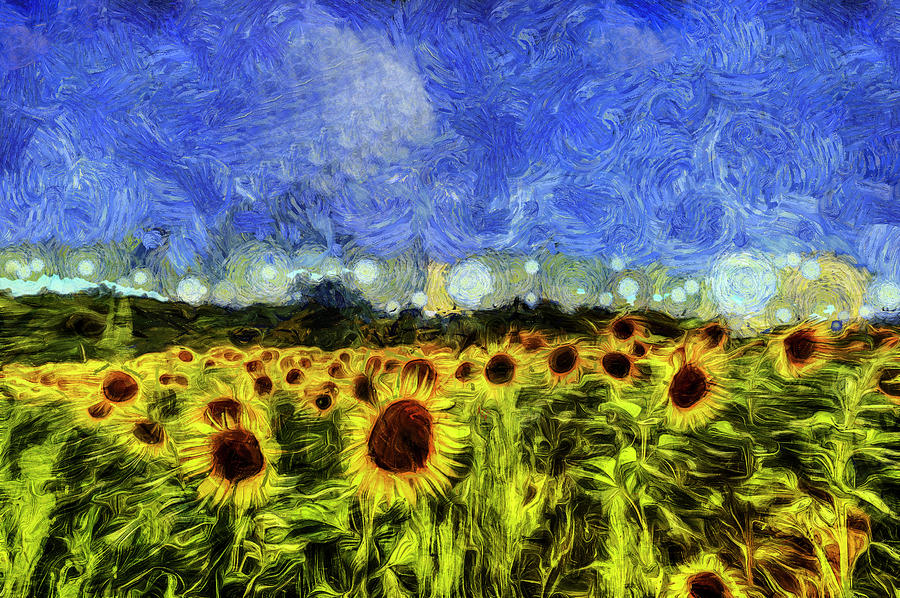
Van Gogh’s investigation of the sunflower theme extended beyond just one canvas. Throughout three distinct periods between 1887 and 1889, he created eleven paintings featuring sunflowers. The most renowned pieces arose during his stay in Arles, where he swiftly completed several canvases as he prepared for fellow painter Paul Gauguin’s visit. This collection was both a technical exploration of color—particularly mastering different tones of yellow—and a symbol of optimism. Van Gogh imagined these sunflower artworks as inviting symbols, intended to adorn the walls of the Yellow House with a sense of warmth and friendship. However, this hope was fleeting; Gauguin left after only a few weeks, leaving Van Gogh’s dreams of artistic companionship unmet.
Despite the personal disappointments surrounding their creation, the sunflower paintings gradually achieved widespread acclaim. In the early 20th century, they became touchstones for artistic vitality and emotional expressiveness. Critics and writers, including Roger Fry and Katherine Mansfield, saw in them a passionate force that broke with academic traditions and elevated the everyday into something transcendent. Van Gogh’s reputation, initially muted during his lifetime, was firmly established in part due to these bold botanical studies.
Today, the legacy of Van Gogh’s sunflowers continues to echo in contemporary art. The Royal Academy’s recent exhibition, Kiefer / Van Gogh, demonstrates how the motif still resonates with modern artists. Anselm Kiefer, known for his monumental and often philosophical work, uses the sunflower as a recurring symbol. In his sculpture Danaë, a sunflower emerges from a pile of books—a striking image that suggests the persistence of life and knowledge through decay. In other pieces, such as a haunting woodcut depicting a flower rising from a human body, Kiefer revisits the sunflower to reflect on mortality, memory, and regeneration.
Based on curator Julien Domercq’s analysis, the sunflower represented Van Gogh’s vision of the South—bathed in sunlight, energetic, and filled with spiritual significance. However, Van Gogh, who had experience in art dealing and possessed extensive knowledge of art history, was also influenced by a long-standing visual tradition. The sunflower’s significance in European symbolism goes well beyond the confines of Van Gogh’s studio.
Brought to Europe in the 1500s following the exploration of the Americas, sunflowers soon acquired significant symbolism. Their unique habit of orienting towards the sun, a phenomenon known as heliotropism, fascinated early scientists and artists. By the end of the Renaissance period, this natural characteristic had evolved into a symbol, intertwining the natural environment with mythical and religious stories.
The myth of Clytie, a water nymph who transformed into a sunflower after being spurned by the sun god Apollo, provided one of the earliest mythic frameworks for the flower’s meaning. Her story was used to represent unrequited love and unwavering devotion, themes that found their way into art throughout the Baroque and Enlightenment periods.
In works such as Maria van Oosterwyck’s Flowers in an Ornamental Vase or Bartholomeus Van der Helst’s Young Woman Holding a Sunflower, the bloom becomes a symbol of love, marriage, or divine faithfulness. Artists such as Anthony van Dyck even used the flower to symbolize their loyalty to royal patrons, blending personal identity with artistic expression in portraits like Self-Portrait with a Sunflower.
The transformation of symbols continued beyond that point. As time went on, the sunflower transformed into a representation of devotion both spiritually and artistically. In the 17th century, the Dutch poet Joost van den Vondel likened the sunflower’s inclination toward the sun to an artist’s quest for the aesthetics of nature, led by inspiration much like a divine illumination.
In the modern era, the sunflower has continued to act as a vessel for complex cultural messages. One of the most compelling contemporary uses of the flower appears in Ai Weiwei’s Sunflower Seeds—a 2010 installation featuring millions of hand-painted porcelain seeds. Ai’s work drew on his memories of Maoist propaganda imagery in which the Chinese leader was depicted as a sun, with citizens shown as sunflowers turning toward him. Here, the symbolism of the flower transforms into a potent political commentary on conformity, control, and individual expression.
The extensive tradition of understanding implies that the sunflower represents more than just a mere plant—it acts as a reflection of human sentiment and faith. The concepts it represents—dedication, change, ephemerality, and ambition—are universally resonant. Whether looking lovingly at an imagined deity or representing life’s fleeting nature, sunflowers convey a profound human urge to pursue brightness, significance, and relationships.
Van Gogh likely perceived multiple meanings in the flower. Though he might not have explicitly explained their significance in his letters, his decisions in art imply an instinctive grasp of their symbolic strength. When he described his sunflower paintings as conveying both distress and thankfulness, he alluded to the flower’s dual character—its capacity to symbolize both suffering and optimism equally.
Anselm Kiefer has similarly embraced the sunflower as a symbol of our fragile existence. His artworks often depict them in decay, blackened or desiccated, their seeds spilling onto the earth. Yet this is not only a portrayal of loss—it’s also a meditation on renewal. The cycle of death and rebirth, of light and darkness, is ever-present in his interpretations. Kiefer links his vision to thinkers like Robert Fludd, the 17th-century cosmologist who believed in a spiritual connection between plants and stars. By framing his sunflowers against the heavens or anchoring them to human bodies, Kiefer explores this metaphysical bond between the terrestrial and the celestial.
In this context, both Van Gogh and Kiefer transform the sunflower into a metaphysical object—one that transcends its botanical identity to engage with the grand themes of existence. Through their art, the flower becomes a visual philosophy, a means to explore life’s impermanence and the possibility of renewal.
In the end, the lasting impact of the sunflower in art resides in its capability to represent complexity while maintaining simplicity. Its shape is immediately identifiable, yet its meaning holds profound depth. For Van Gogh, it could have symbolized an offering of companionship or a quest for spiritual insight. For Kiefer, it represents a metaphor for deterioration and renewal. And for observers, it provides an opportunity to contemplate commitment, the passage of time, and the unending attraction to light.
When sunflowers blossom in fields every summer, they reflect the visual dialogue of artistic expression developed over centuries. With their blooms inclined toward the sunlight, they symbolize our pursuit of warmth, beauty, and meaning—qualities that surpass time and continue to manifest in paintings, sculptures, and the realm of human creativity.