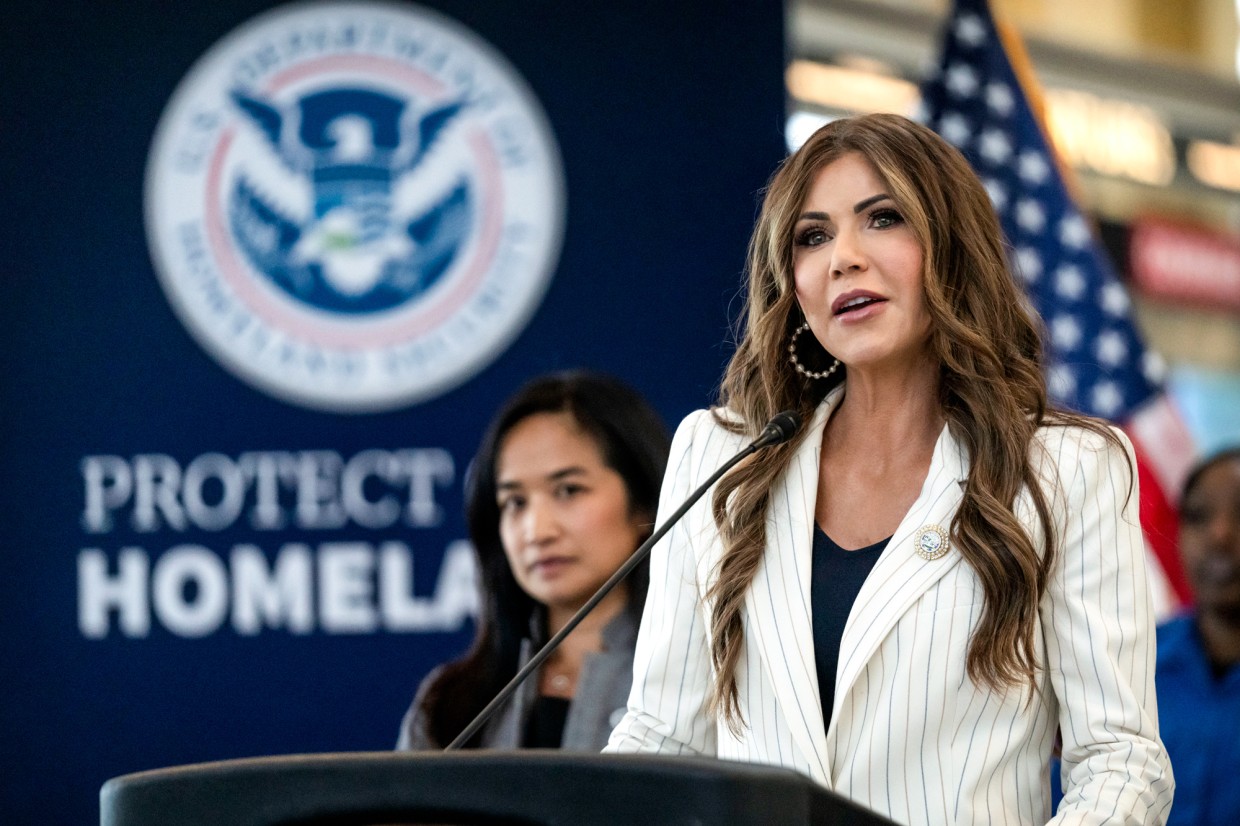
The United States is nearing a significant election period, and various state officials are voicing increasing concern over the Department of Homeland Security (DHS)’s ability and dependability, especially due to reduced personnel and persistent distrust stemming from the policies of the Trump administration. Though DHS continues to be a vital federal agency responsible for supporting states in securing elections against both internal and external dangers, doubts have arisen about its perceived trustworthiness and operational efficacy.
In recent months, several state election officials have expressed concerns about depending on DHS’s cybersecurity and infrastructure protection branches. These worries arise from both organizational changes made during the prior administration and persistent resource constraints. Their concerns emphasize a larger problem within America’s fragmented electoral framework: the cooperation between state and federal bodies to safeguard a core element of democracy.
During former President Donald Trump’s tenure, the relationship between DHS and state election officials was often contentious. Despite the formation of the Cybersecurity and Infrastructure Security Agency (CISA) in 2018—a DHS subdivision created to support critical infrastructure protection, including election systems—Trump’s rhetoric surrounding election legitimacy frequently clashed with CISA’s public statements.
Following the 2020 election, representatives from CISA declared that the election process was secure and that there was no indication of significant fraud. This statement directly opposed Trump’s allegations of election wrongdoing, resulting in the termination of CISA Director Christopher Krebs. His removal surprised many in the cybersecurity community and public officials. This event signified a shift in how certain state authorities viewed the impartiality and dependability of DHS.
Now, even with new leadership in place, the agency faces lingering skepticism, especially among those who believe that its independence may have been compromised under political pressure. As a result, certain states are hesitant to fully rely on DHS for election-related support, despite growing cyber threats targeting voter databases, election infrastructure, and public trust.
Adding to the problem of trust is a decrease in personnel in essential departments within DHS that give cybersecurity support to state and local governments. Based on internal reviews and public reports, numerous cybersecurity positions are unfilled, hindering the agency’s capacity to provide prompt assistance or allocate resources during important election times.
For example, election officials in several states report delays in receiving DHS vulnerability assessments or intelligence briefings. These services—once seen as essential tools in preparing for cyberattacks or disinformation campaigns—have become harder to access due to limited personnel and strained coordination between federal and state actors.
In certain situations, states have looked to private cybersecurity companies or set up standalone teams to address what is seen as a lack of federal assistance. Although these actions can offer important safeguards, they might also result in uneven standards and disjointed security practices across different areas.
In response to their concerns, state election officials have sought to bolster in-house cybersecurity capabilities and forge partnerships with more trusted federal or non-governmental entities. Several states have expanded their own election security offices, hired dedicated information security officers, and increased investments in staff training and technological upgrades.
Additionally, certain state secretaries have sought to work alongside the National Guard’s cybersecurity teams or academic bodies with knowledge in maintaining election security. These approaches enable states to maintain more direct oversight of their systems while still leveraging outside expertise.
Despite this pivot, many states acknowledge that DHS still holds valuable resources, particularly in threat intelligence, vulnerability scanning, and coordination with intelligence agencies. The challenge lies in rebuilding the kind of collaborative relationship that can make these tools both effective and trusted.
Since the transition to the Biden administration, CISA has made visible efforts to restore its standing as a nonpartisan protector of election security. Under new leadership, the agency has launched outreach initiatives aimed at reassuring state officials of its commitment to transparency and neutrality. These include regular threat briefings, public webinars, and regional security summits tailored to the needs of local election administrators.
CISA has also emphasized the importance of its role as a “trusted partner,” offering free services such as risk assessments, intrusion detection tools, and best practices guides for election infrastructure protection. However, the lingering impact of prior controversies continues to affect how some states perceive and utilize these offerings.
To address these challenges, the agency is working to expand its staffing pipeline and improve interagency coordination, but rebuilding trust remains a long-term project. Election security officials note that consistency, clear communication, and political independence will be key to strengthening these partnerships moving forward.
As cyber threats linked to elections keep changing, the significance of a unified federal-state partnership becomes increasingly crucial. Systems at the state level are often targeted by ransomware attacks, phishing schemes, and foreign influence operations. In the absence of coordinated defense plans and shared information networks, the integrity of the nation’s electoral process might face growing risks.
Experts warn that fragmentation in the security landscape—where each state acts independently with little coordination—can create weak points that adversaries exploit. DHS, with its broad mandate and access to federal intelligence, remains a uniquely positioned agency to support a unified response.
However, this potential can only be achieved if state authorities have confidence in the agency’s intentions, skills, and professionalism. As one election official stated, “We can’t afford distrust when the stakes are so high—though we must be careful about whom we choose to trust.”
As the 2024 general election approaches, election officials at both state and local levels are finishing their cybersecurity plans and logistical arrangements. It’s still uncertain if DHS will be a key player in these plans in various states, particularly in those that are still dealing with issues related to staffing and previous political meddling.
Some lawmakers have called for additional funding to bolster both DHS and state election offices, recognizing that robust defense requires investment at all levels. Others advocate for legislative reforms to clarify the agency’s responsibilities and insulate its leadership from political pressure.
At the same time, CISA keeps collaborating with stakeholders, fine-tuning its communication strategies, and enhancing its assistance offerings to recover trust across all 50 states. The real challenge will be determining if these efforts lead to successful, reliable partnerships once the forthcoming major election period commences.
The history of previous disputes and current limitations in resources have led some states to doubt the dependability of the Department of Homeland Security in safeguarding elections. Although the agency is still a vital component in the wider cybersecurity field, restoring full confidence among state leaders hinges on being transparent, enhancing staffing, and showing a true dedication to impartial aid.
As elections grow more complex and digital threats more sophisticated, ensuring that every level of government can work together securely is essential. Without it, the vulnerabilities aren’t just technological—they’re institutional, and they strike at the very foundation of democratic participation.