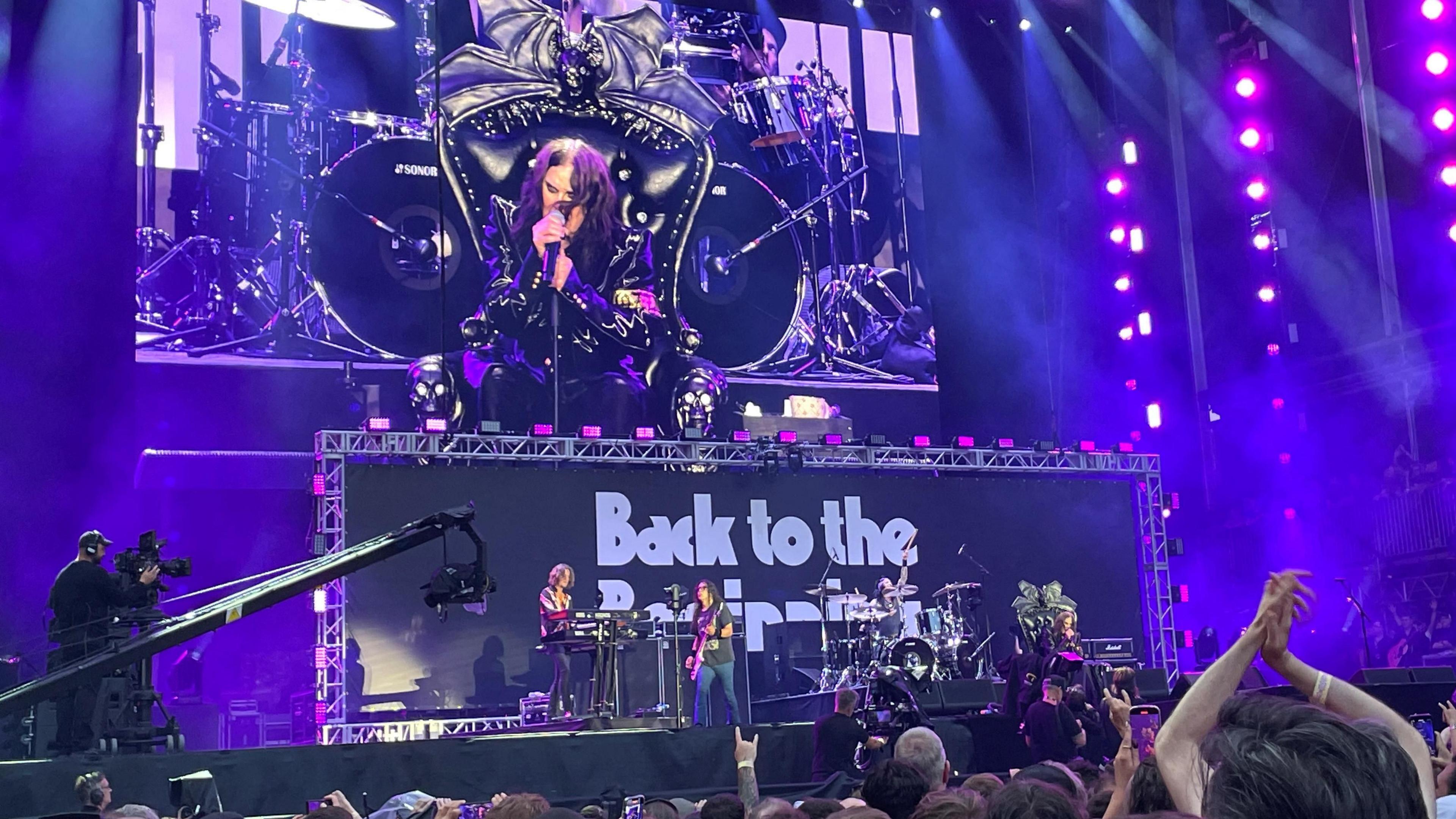
As a prominent and oft-debated personality in the realm of rock bids farewell to live shows forever, the worldwide music scene has united to honor the legacy of Ozzy Osbourne. His decision to retire indefinitely from stage performances has triggered a flood of praises from musicians, actors, and admirers around the globe, all sharing a common message—an artist of his caliber is truly one of a kind.
Ozzy Osbourne’s career spans over five decades and includes countless iconic moments. Rising to fame as the frontman of Black Sabbath in the late 1960s, he helped pioneer a darker, heavier sound that would ultimately lay the foundation for heavy metal as a genre. With haunting lyrics, thunderous riffs, and an unmistakable stage presence, Osbourne didn’t just perform music—he created an atmosphere that reshaped what rock could be.
The shockwaves from his musical innovation are still felt today. From Metallica to Slipknot, from Iron Maiden to contemporary hard rock bands, countless artists credit Osbourne and Black Sabbath as their earliest and most significant influences. His willingness to experiment, his defiance of norms, and his magnetic unpredictability gave younger generations of performers permission to push boundaries and embrace their artistic freedom.
In the wake of his retirement, tributes have poured in across social media and in interviews. Rock legends and pop icons alike have spoken out, offering their appreciation for Osbourne’s contributions to music and culture. Many have described him as a fearless innovator—someone who wasn’t afraid to be loud, to be different, to be himself. Artists have shared personal memories of meeting him backstage, of hearing Black Sabbath for the first time, or of simply watching him perform with a kind of energy that made audiences feel both electrified and strangely understood.
Maybe what endears Osbourne to so many, apart from his music, is the openness and sincerity he showed throughout his career. Although his performances were intense and dramatic, he consistently spoke candidly about his battles with substance abuse, mental wellness, and the toll that extensive touring had on his health. Over time, these revelations only heightened the respect many had for him—he was genuine, imperfect, and relatable, yet somehow still seemed larger than life.
Osbourne’s statement followed an enduring and open fight against medical problems such as a Parkinson’s diagnosis and spinal injuries. These hurdles have progressively complicated his ability to tour, resulting in the cancellation of numerous concerts and ultimately to his conclusion to retire entirely from live performances. In a note to his supporters, he conveyed profound sorrow for being unable to deliver the performance they merited, but also expressed appreciation for the many years of steadfast support he has received globally.
The reaction from fans has been astonishing—filled with affection rather than letdown. Throughout various channels, individuals are recounting tales of their initial concert, the first moment they listened to a Black Sabbath album, or how his music supported them during challenging periods. To numerous people, Osbourne’s creations were more than mere amusement; they served as a form of emotional release, a voice that comprehended isolation, rage, and endurance.Even outside of music, Osbourne has had a lasting impact on pop culture. His reality TV series, The Osbournes, gave viewers a raw and humorous look at his life off-stage, endearing him to a whole new audience and showcasing a softer, more familial side to the so-called “Prince of Darkness.” The show’s success helped normalize a different kind of masculinity in rock—one that could be tough yet tender, eccentric yet deeply caring.
Although Osbourne might be stepping away from live performances, he has emphasized that he is not vanishing completely. His latest records have been met with critical acclaim, and he remains active in working with musicians in various styles. There are also rumors about future studio projects, autobiographies, and other artistic ventures in the future. In typical Ozzy style, the chapter on touring might have ended, but his narrative continues.
What is remarkable at this point is the wide range of individuals honoring him—not only prominent figures in heavy metal, but also popular pop icons, punk rock groups, and independent artists. This says a great deal about Osbourne’s extensive impact. His effect went beyond musical categories. He introduced a dramatic flair to music like few others, and he achieved this without losing his authentic self. He didn’t alter himself to match the world; instead, he adapted the world to align with his vision.
The reverence being shown now also speaks to a deeper truth: artists like Ozzy Osbourne don’t come around often. He wasn’t just a singer in a band; he was a movement. He defined an aesthetic, a sound, and a spirit that will outlive the man himself. There are musicians who entertain, and there are those who define generations—Ozzy was undeniably the latter.
In his farewell message, Osbourne thanked his fans, his family, and his longtime collaborators for standing by him throughout his highs and lows. But it’s clear that the gratitude goes both ways. Fans and fellow artists alike are grateful for the music, for the honesty, and for the permission to be themselves—loudly, unapologetically, and without compromise.
While tributes keep pouring in, one fact is clear: Ozzy Osbourne’s legacy is well established. His music will keep resonating in dimly lit clubs, festival venues, garages, and headphones globally. His story will be recounted to new admirers in the years ahead. And his voice, distinctive and memorable, will reverberate through the corridors of rock history as one of its most vital.
Though the era of Ozzy on stage may be ending, the spirit of what he created endures. And in the words of many who knew him, worked with him, or simply admired him from afar—there truly will never be another Ozzy.