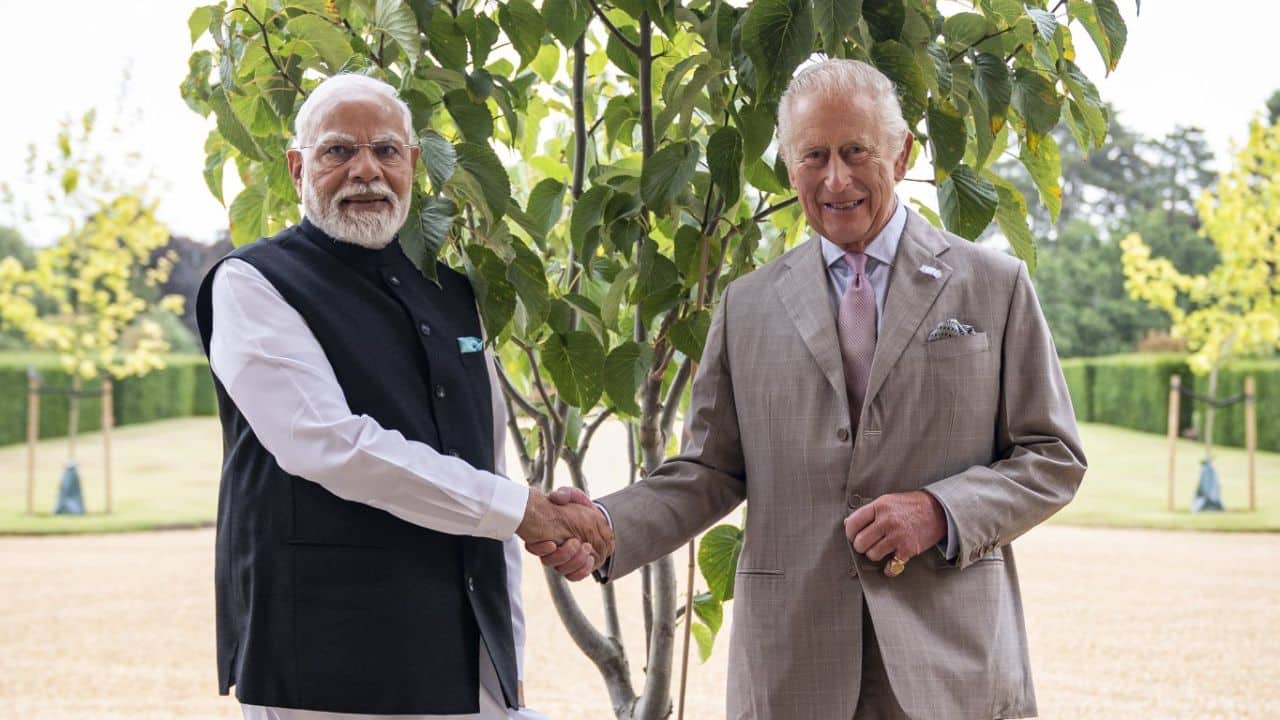
After the recent finalization of an important trade deal between India and the United Kingdom, a diplomatic discussion occurred between the King and Indian Prime Minister Narendra Modi. This meeting, viewed as an act of mutual appreciation and strategic cooperation, underscores the developing economic and political relationship between the two countries, particularly in light of the newly established trade framework.
The encounter took place amid a backdrop of growing bilateral cooperation, as both countries seek to deepen their partnership across various sectors, including commerce, technology, climate initiatives, and security. With the trade pact now formally in place, the visit served to reinforce the shared commitment to a long-term economic relationship built on mutual benefit.
The commercial deal, which has been in discussion for numerous years, signifies a historic point in India-UK relations. It aims to lower or abolish tariffs on a wide array of products and services, simplify regulatory norms, and boost market entry for sectors on both sides. For the UK, this agreement forms part of a larger plan to enhance trade relations beyond the European Union, establishing its standing as a key trading nation in the post-Brexit context. For India, the deal brings increased opportunities for exports and broader access to capital, knowledge, and technology.
During their meeting, the King and Prime Minister Modi are believed to have discussed not only the trade deal’s implications but also broader topics of bilateral significance. These included sustainable development, educational exchange, cultural cooperation, and climate policy. The conversation likely touched on the importance of people-to-people ties, considering the significant Indian diaspora in the United Kingdom and the deep historical links between the two countries.
While the King’s role in government is ceremonial and apolitical, his participation in such meetings often underscores the importance of a diplomatic relationship. The symbolic weight of royal engagement, particularly in the context of international diplomacy, can help enhance public perception and lend gravitas to key milestones like this agreement.
Observers have highlighted that the scheduling of the meeting indicates a wider movement toward stronger interaction between London and New Delhi. As worldwide power structures keep changing, both nations are more frequently viewing each other as strategic allies in a multipolar environment. The alignment of interests in sectors such as digital infrastructure, defense partnerships, renewable energy, and education makes the relationship practical and future-oriented.
In realistic terms, the fresh trade pact is anticipated to offer substantial prospects for companies and employees. Industries like automotive, pharmaceuticals, textiles, and financial services are expected to gain from fewer obstacles and more defined guidelines for international trade. Moreover, small and medium-sized enterprises in both nations may discover new opportunities for global growth due to the streamlined regulatory framework.
Besides the economic advantages, the agreement is seen as an initial move toward a more profound strategic collaboration. India and the UK both belong to significant international platforms like the G20 and Commonwealth, and have common values based on democracy, legal principles, and free-market systems. Enhancing bilateral relations might also help establish a more stable and robust global environment, especially amid increasing geopolitical unpredictability.
Prime Minister Modi, in particular, has emphasized the role of trade as a driver of development and self-reliance. The deal aligns with India’s ambitions to become a global manufacturing and innovation hub, attracting investment and technology that can accelerate domestic growth. For the UK, access to one of the world’s fastest-growing major economies is critical as it diversifies its international trade network.
Opponents of the agreement, on the other hand, have expressed worries about working conditions, ecological regulations, and the possible effects on domestic sectors. It will be essential to have thorough execution and continuous discussions among legislators, business executives, and community groups to make certain that the advantages of the deal are widely distributed.
As the details of the agreement begin to take shape, attention will now turn to how both governments manage its rollout. This includes updating domestic legislation, setting up bilateral oversight mechanisms, and engaging stakeholders to ensure smooth execution. It will also involve fostering business-to-business connections, promoting investment opportunities, and increasing public awareness of the new opportunities created by the trade framework.
The symbolic value of the King’s meeting with Prime Minister Modi cannot be overstated. It signals a moment of optimism and shared purpose at a time when global cooperation is often strained. It also reinforces the message that diplomacy and dialogue continue to play an essential role in shaping the international landscape.
In the coming months, the success of the trade deal will be measured not only in export figures or GDP growth but in the strength of the relationship it helps foster. Deeper collaboration on innovation, education, sustainability, and cultural exchange could serve as the true legacy of this agreement.
For both nations, this is more than just a trade pact—it represents a renewed chapter in a long and complex relationship, one that looks to the future while acknowledging the past. As India and the UK take steps to strengthen their strategic alignment, their leaders’ willingness to engage at the highest levels lays a strong foundation for continued cooperation in a world that increasingly values trusted partnerships.